


The rain had just stopped. Cobblestones gleamed under my shoes, slick and black, reflecting the muted gray light of a Prague afternoon. Each stone felt like a century in miniature, worn smooth by merchants, scholars, children, and countless generations of Jews walking to shul, to markets, to schools. The air smelled faintly of wet stone, smoke, and a Chimney cake baking somewhere around the corner. I turned the narrow street, and there it was: the Old New Synagogue. Low, dark wood, unassuming, almost shy. Built around 1270, it is the oldest active synagogue in Europe, a rare survivor of centuries when Jewish houses of worship were destroyed or abandoned.
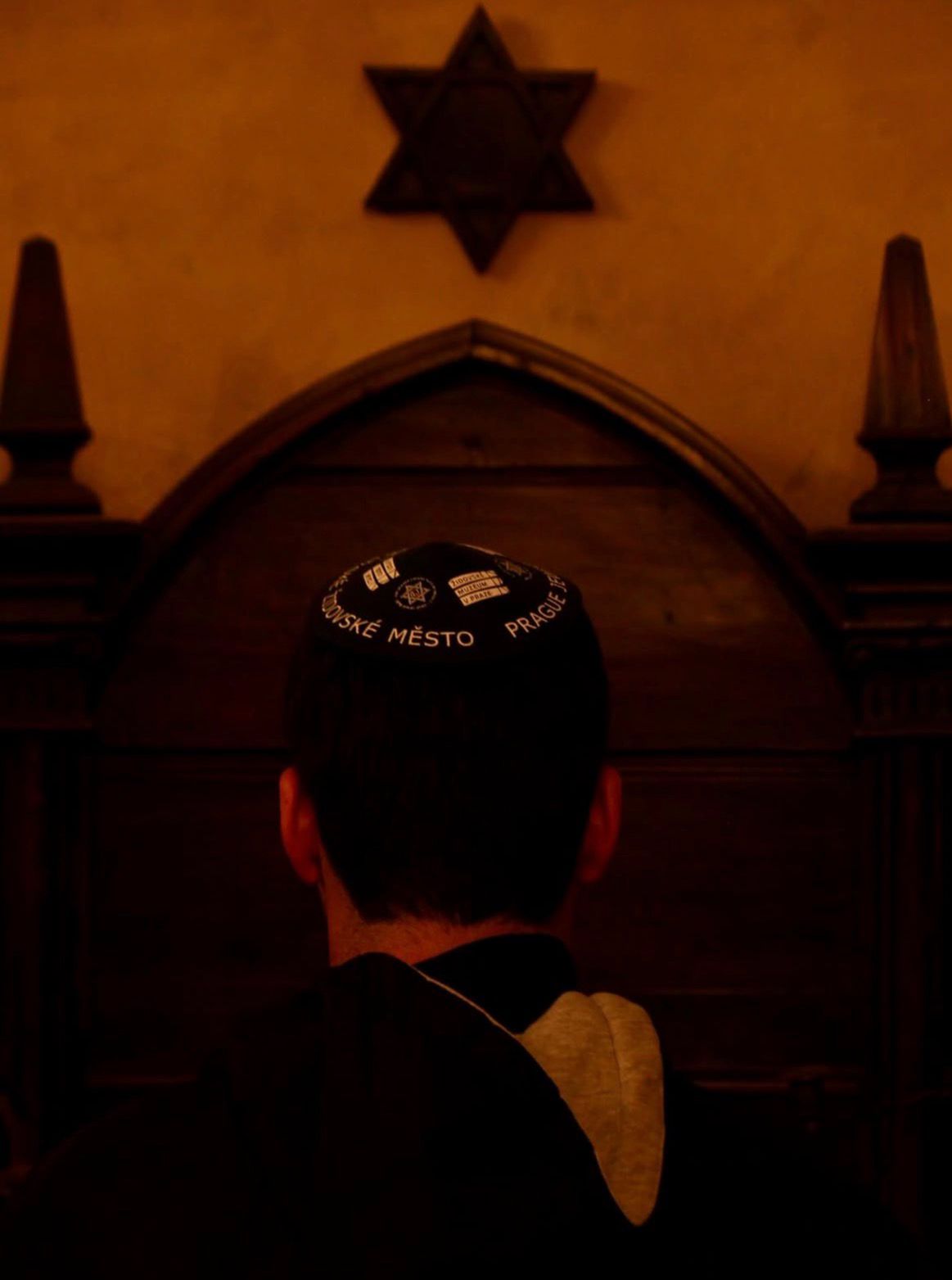
I pushed open the doors and stepped inside. The world outside folded away. The air smelled like wood, candle smoke, and centuries of devotion. Shafts of sunlight fell through tiny, high windows, cutting through the dust in golden threads. Every surface, the stone floor, the benches, the walls, had felt the weight of hands and prayers, of lives lived fully, in both fear and hope. Each inch of this space carries centuries of Jewish life: families navigating daily tasks, merchants counting coins, mothers carrying infants, scholars poring over texts, all surviving in a ghetto where movement, ownership, and expression were restricted.
It was in that stillness, among the dust, light, and worn wood, that I felt a presence, pressing gently through the centuries to reach me. I traced the benches until I reached the chair that tradition marks as his, the rabbi’s seat, placed next to the ark, the sacred cabinet holding the Torah scrolls. From this position, the Maharal, my 15th great-grandfather, would have guided the congregation, led prayers, and interpreted the Torah, his voice carrying authority and care. The placement of the chair was deliberate: next to the ark, he was anchor and guide, always near the sacred scrolls, always facing the people he shepherded. It wasn’t just a chair; it was a seat of responsibility, legacy, and continuity.
The Maharal, Maharal of Prague, whose name is an acronym of the Hebrew Moreinu HaRav Loew, “Our Teacher, Rabbi Loew”, was born in 1520 and served as chief rabbi of Prague in the late 16th century, during a time when the Jewish community was confined to the ghetto, surrounded by walls, and under constant scrutiny. The title itself reflects his role: he was recognized as a guiding teacher, a moral and spiritual anchor whose wisdom shaped lives and whose counsel reached far beyond the ghetto walls. He was a scholar, philosopher, and teacher whose works on Jewish law, ethics, and Kabbalah still resonate today. Sitting here centuries later, I felt the thread of his life carry through me. He had walked these floors, breathed this air, led these prayers, and I, his descendant, was here.
I stepped outside and followed the narrow path to the Old Jewish Cemetery, established in the early 1400s. Space was scarce, so the dead were buried in layers, sometimes twelve graves deep. More than 100,000 people. Gravestones leaned on one another as if for support. Moss softened the inscriptions but could not erase them. The cemetery survived centuries of upheaval, including Nazi occupation, when much of the ghetto was destroyed. Here, history is tangible, layered like the stones themselves, and it includes the lives of my direct family.
I walked slowly, fingers brushing chipped stone, tracing names, imagining the weight of daily life under Habsburg rule: cold winter mornings, cramped rooms, whispered prayers of hope and fear. These ancestors didn’t know me, yet their lives shaped the one that brought me here. Family is not only those who call your name, it is the line of persistence, faith, and care stretching across centuries to reach you.
I lingered in the cemetery, feeling the quiet hum of survival pressed into stone. And I realized: the Maharal’s presence, the life of my direct ancestors, were layered into the air itself, into the benches, the walls, the arc of history pressing toward the present. Returning to the synagogue, I sat once more on that worn bench. The light filtered through the windows, the dust hung in golden threads, and I understood the profound intimacy of this place.
Prague does not let time pass quietly. Time folds, layers, presses. The synagogue, the cemetery, the streets, they are not relics; they are living connections. I am held by centuries of my own family, and in turn, I must hold them. Belonging is not pride. It is presence. It is showing up where the past breathes, noticing it, and carrying it forward deliberately, humbly, fully.
And in that recognition, I understood something permanent: history is not distant. It is intimate. It is tangible. Continuity, the line of family, of faith, of survival, is not inherited lightly. It is felt. It is embraced. It is lived.
Gavin is an Aleph living in Deerfield, Illinois and loves fishing, hanging out with friends, wrestling for his high school team, and helping the community!
All views expressed on content written for The Shofar represent the opinions and thoughts of the individual authors. The author biography represents the author at the time in which they were in BBYO.

.jpeg)

